It’s too late for Hallowe’en, but Linda Rodriguez McRobbie’s Smithsonian Magazine article on “The Strange and Mysterious History of the Ouija Board” is worth a read if you’re at all interested in nineteenth-century history, or in the occult, or if you’ve ever played with one. Or if, like me, you’re at all interested in the limitations of science and of scientific thinking and in the ways Americans today think about religion. (My thoughts follow the jump.)
A crumbling sanctuary of dawn-lit leaves
The east window of my study looks out through a scrim of trees to the neighbor’s golf-green yard and the street and, further on, a young wood of mostly pines. The trees close by appear only as vertical trunks, their leaves cropped out by the window’s frame, but a dogwood leans out low from their shadow and shelters the view with its foliage. For a few short weeks in early fall, when the leaves of the dogwood blushed but still clung to their limbs, the morning light set their edges glowing red-gold, and past their brilliant outlines I could see only the fuzzy blue-green shadow of distant pines. The study became a sanctuary enfolded by copper light, beyond which the world was made misty, unfocused, irrelevant.
That effect lasted only an hour each morning and for two or three weeks. By mid-morning the sun had climbed high enough to light the leaves of the backdrop woods; by the second week of October the dogwood’s leaves had thinned and let the world through in too much clarity. The sanctuary is crumbling now, and what remains is only a relic, like the cracked foundations of an ancient church now open to air and birdflight, in which I sit wondering if God really lived here once.
I got a lot of work done during those weeks.
Cheap poetry, Summer 2013
Silent at her loom the spider labors
To be unseen and never heard — as do I, watching,
Until, unseeing, I cry out: Web in my beard.
She chews her words, predigesting
Speech, sound and picture out of sync
Like Mothra’s overdub. I would prefer
Silence, and a piano.
Thin and wan like a starving dog, the coffee
Tints the cup — or does the cup tint it?
Not strong enough to fuel philosophy.
It is no longer June
By nine the air already sweats.
The sun, wearier today than once
Climbs but slow, as travelers laden
Struggle to heft again damp spirits,
While all around our dizzied ears
This primeval din the wood exudes—
This moldering cacophony
Swells in time with sweltering
And seeps in through our pores like rain.
By nine the air already sweats.
But overhead on fruitless bough
A bird extends his morning song,
Forgetting that it is no longer June.
The turbulence that creates the beauty
From the high ridge the river is placid, dark, smooth, its motion undetectable except by implication of the muddy-pale passage my analytical self knows to be rapids. It winds through the landscape, around unperturbed boulders, past trees positioned as dramatic backdrop by unseen woodsman stagehands. A heron lifts off from some hidden cove and glides easily over the water, ages below me. If the river misses him it keeps its feelings to itself. Occasionally a spot of foam tossed up by turbulence twinkles in the sun, just to keep the viewer interested. Oh, it is beautiful, this placid unmoving scene. It is the beauty of the Grand Canyon, the mountain overlook, the window on the eighty-seventh floor. The beauty of landscape that renders us insignificant before its grandeur and yet also grants us power over it. We comprehend the landscape while seeing nothing of real importance. We look on it with the gaze of science, or of bureaucracy — broad, encompassing, staking authority while proclaiming modesty, underscoring the insignificance of our achievement. From here we are assured that the river runs smoothly on its course, an assurance we have granted ourselves by choosing to remain distant from it. A cold, uneasy beauty.

Fat(e), free will, and forgiveness

A hundred-odd years ago, gluttony was a sin, but fat men could be seen merely as successful. We seem to have reversed the calculus.
Some of the new research on possible causes of obesity is fascinating. New theories emerge continually, many of them at best inconsistent and at worst contradictory. But what interests me more is the debate that research sparks, which seems, at least in the popular arena, to be less about what actually causes obesity than about whose fault it is. It’s a subtle but important difference: the former is (largely, at least) a scientific question; the latter makes it a political or a philosophical one — and is, it seems to me, a thoroughly unhelpful approach.
A good window
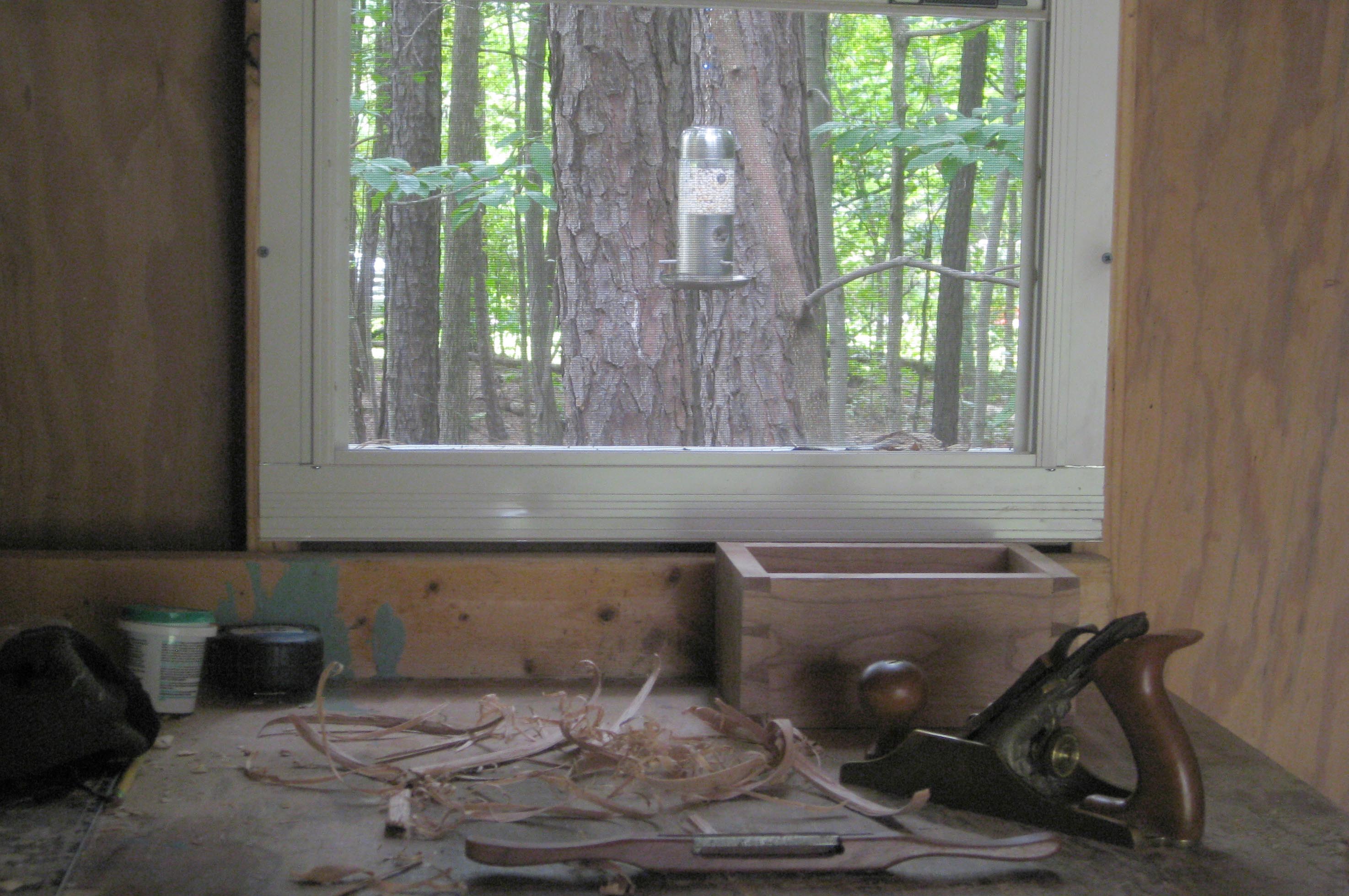
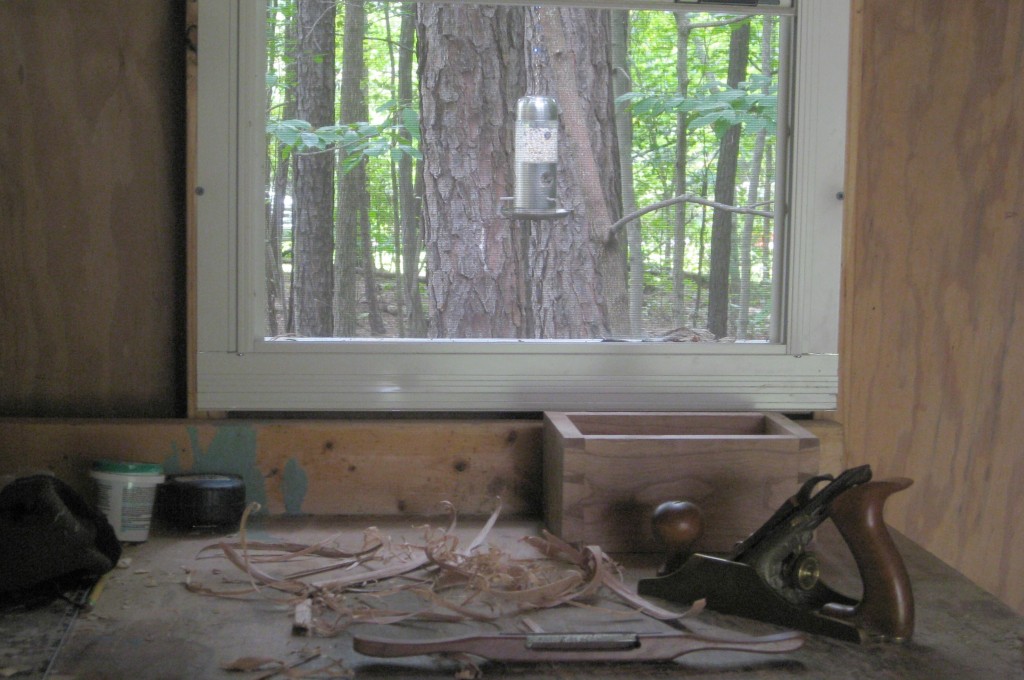
A window, it seems to me, has three crucial tasks: to let in light, air, and birdsong. The lack of a sill can be forgiven as long as one can buy a decent table. Fenestration only impresses passersby, who have neither to live with the window or to pay for it. But the first three are unequivocal. To fail at the first task is to fail existentially, for a window that lets in no light is no window at all. To fail at the second leaves the occupant stifled and sour like a fish in a bowl, and his only consolation is the muttering of curses at the incompetent builder or too-clever architect. But a window that, succeeding at the first two tasks, fails at the third places the man at the mercy of his infernal alarm clock, whose harpy shrilling at the pale birth of a clear spring morning is an offense to nature and to nature’s God and for which, worst of all, the damn fool can blame only himself for choosing to live where there are no birds.
(From my great-uncle William Warmkessel’s diary of May 11, 1934. Whether inspired by some new architectural unpleasantry on Duke’s campus or his own alarm clock, I don’t know. He ought in any case to have been pleased with the window I installed in my workshop last month, which, since I bought a house in the woods and hung a birdfeeder from the dogwood outside, meets all his criteria. His only complaint would likely be mine, which is that it took me fifteen years to hang the damn thing.)
In the parking lot
In the parking lot are tiny islands of grass, as if the rising tide of asphalt had not yet quite drowned the dirt. Tiny trees are planted in them, their lateral limbs pruned within the limits of their concrete barriers, and the trunks are anchored by thick cables to posts in the ground: because otherwise, of course, the trees would simply pack up and leave, plunge into the asphalt sea and swim for some imagined shore, branches angling awkwardly through the oil slicks and yellow lines, roots flailing behind like vestigial fins until they washed up exhausted against the mall. Shoppers heading for home would find the doors blocked by beached trees gasping their last, pathetically coughing up sap and splinters of macadam.
How to fail to write a poem
Sit in the shade of a flowering tree
While wisps of cloud like puppies chase their tails.
Watch the ribcage of a dog
Fall into rhythm with the swaying grass.
Study the violent dancing of a tree, the moment after
An unseen squirrel leaps from its boughs.
Imagine names for numbers of the shades
Of green that fill the layers of the wood.
Overhear the whispers of the afternoon
To its lover going back to sleep.
Hold your pen at equipoise
Between the silence and a conversation:
Await the inspiration of somnolence. Bask
In the bright doldrums of the day.
Repeat as necessary.
Mapping industrialization: Railroads and factories
I created these maps for LEARN NC as part of a unit on industrialization in North Carolina to show why factories were built where they were. The map showing the location of textile mills was used in an exhibit at the North Carolina Museum of History in 2011.