rubble

A lifetime’s work

rubble

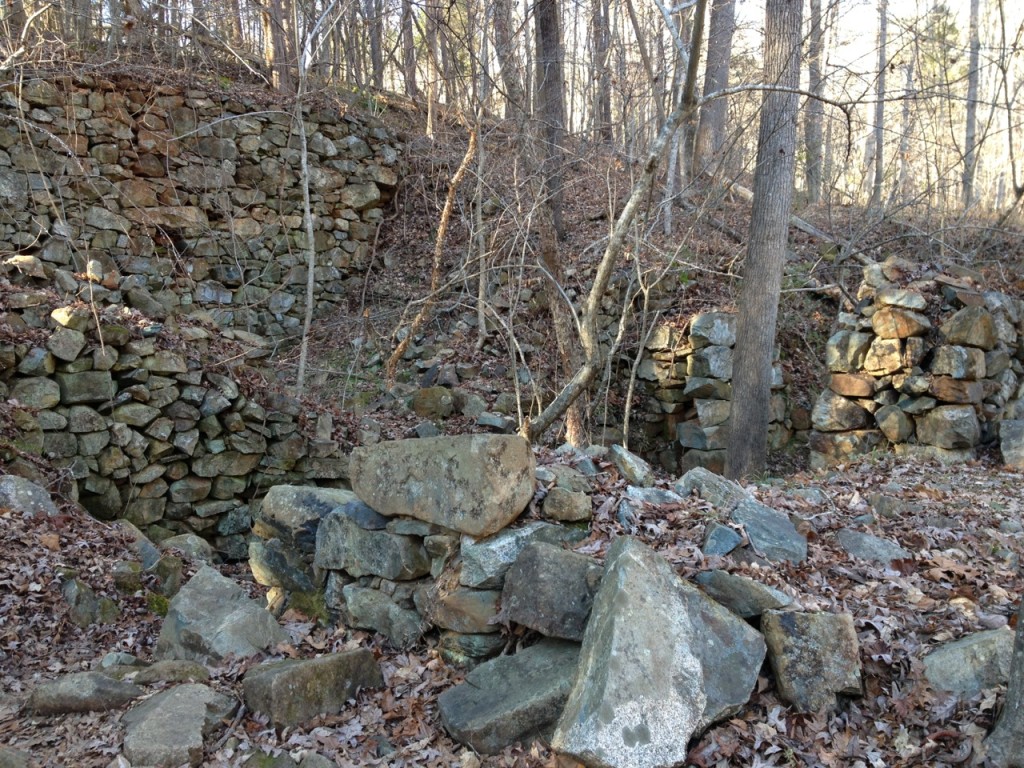
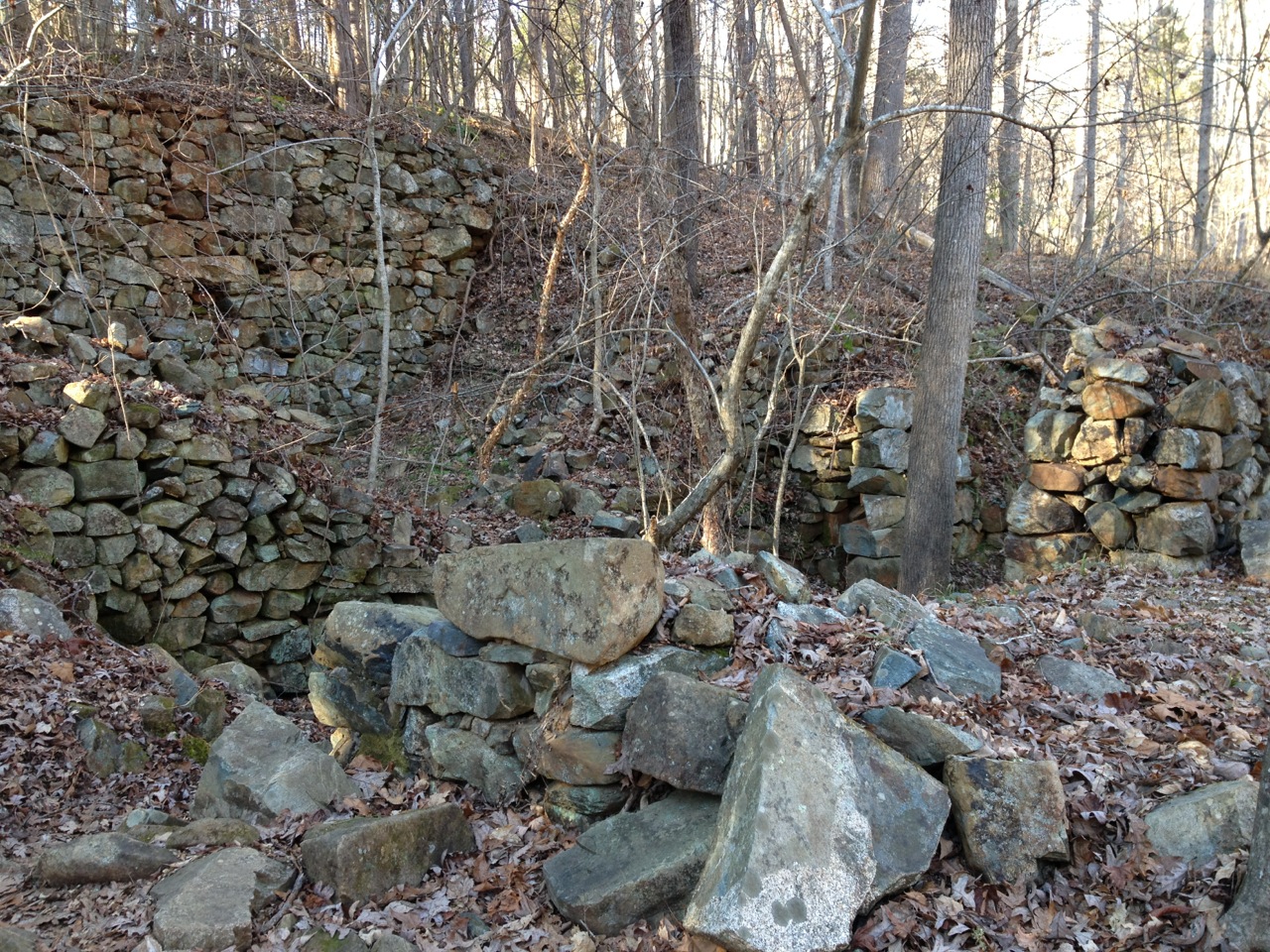
A lifetime’s work reduced by lifetimes since
To a pile of stones in a ferny wood, grown o’er
With moss and vines, and gently hid to all
But those who wish to see. A gift from him
Who dwelt here once, to be now so effaced
From a hillside once his own — for now it may
Be mine, or anyone’s. Would that we
Were half so generous.

the anunciation, by Henry Turner

Not nearly frightened enough

the anunciation, by Henry Turner

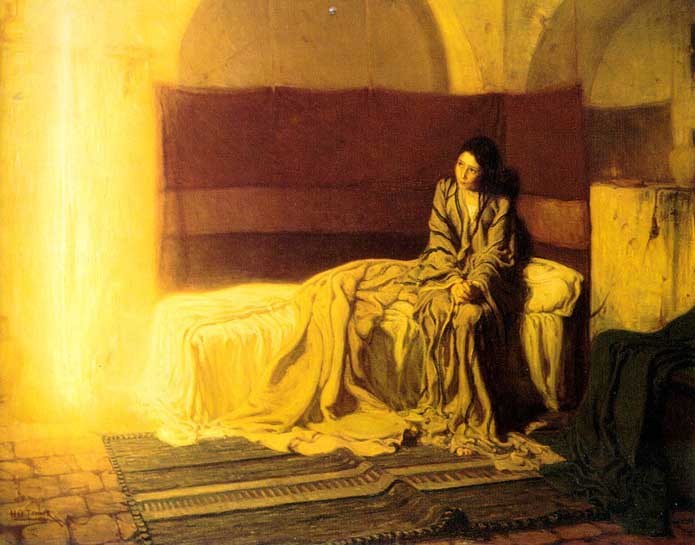
The Anunciation by Henry Turner, 1898.

The angels in Luke’s gospel spend a lot of time telling people not to be afraid. Fear not, Zechariah! Fear not, Mary! Fear not, shepherds! And over in Matthew, Do not be afraid, Joseph! They remind me of a guy I used to work for, who often opened his emails with “Now, don’t panic…” When he did that, I knew I was in for it. I knew there was a but coming, and that the but was the point of the message. And that was only my boss. When an angel of the Lord appears unto you, saying fear not, you know that but is going to be a whopper, because angels don’t appear to people to tell them they forgot the milk at the grocery store.

Hey, Joe, now don’t panic, man, keep it chill, but your fiancée’s pregnant by the Holy Spirit. And look, man, we need you to marry her anyway and raise the baby as if it were your own. You’ll face scorn and rejection, but hey, no worries — everything’s going to be all right.

No problem.

Of course when an angel of the Lord tells you that everything will turn out all right, you can safely assume that it will, even if God’s standards for “all right” may not always line up perfectly with our own. And the Christmas story is so thoroughly infused with everything’s gonna be all right that we forget to be afraid when the angel appears. We jump ahead to the scene at the manger, the new baby who never cries, the mother who is not at all tired or sore, the stepfather who does not mind at all having been cuckolded by God or being forced to shelter his pregnant wife and newborn son in a barn, the shepherds slack-jawed in contented wonder, the magi safely arrived with their expensive gifts and nattily dressed entourages. We have viewed that scene so many times that we barely give it a second thought. I see it a half-dozen times just driving into town, spread out in neighbors’ yards.

The specificity of good wishes

I ran across this quotation this morning, with which I’d like to agree if it didn’t irritate me so much:

…When a festival goes as it should, men receive something that is not in human power to give. This is the by now almost forgotten reason for the age-old custom of wishing one another well on great festivals. What are we really wishing our fellow men when we send them ‘best wishes for Christmas’? Health, enjoyment of each other’s company, thriving children, success—all these things, too, of course. We may even—why not?—be wishing them a good appetite for the holiday meal. But the real thing we are wishing is the ‘success’ of the festive celebration itself, not just its outer forms and enrichments, not the trimmings, but the gift that is meant to be the true fruit of the festival: renewal, transformation, rebirth. Nowadays, to be sure, all this can barely be sensed behind the trite formula: ‘Happy Holidays.’

Josef Pieper, In Tune with the World: A Theory of Festivity (St. Augustine’s Press)

I haven’t read the book from which the passage is taken and know almost nothing of Josef Pieper, so my criticism may be less of the author than of the person who quoted him, but the jab against “Happy Holidays” seems a tad overwrought — as if a two-word cliché constituted a magic formula for the bestowal of divine grace, or were meant to be. And it fits far neatly into a certain kind of good-old-days thinking that I will admit I find tiresome. Back in the days when people wished a Merry Christmas to strangers over a store counter — say, a quarter century before Pieper wrote this in in 1999, which is just about the earliest reach of my memory — did they really have all that in mind? Renewal, transformation, rebirth? I wouldn’t venture to give people quite that much credit, even when the store counter was replaced by a folding table at my small-town church bazaar, even when they might have had the necessary theological grounding. Certainly it’s possible to pack all that meaning into “Merry Christmas,” and perhaps that’s what people ought to have meant, but I don’t believe they’d thought it through quite so carefully.

Then again, the possibility of meaning is not something to be lightly dismissed.

Advent at the Hampton Inn

A hotel lobby, a cramped wallflower table. The hesitant scuttle of broken fasts. The man-sized screen, brighter than a thousand votives, in whose light we see light: I avert my eyes but cannot elude the fast-pitch prophecy, the effervescent urge to self-improvement. Nor the smell of frozen waffles toasting, plastic syrup warming, chemistry-sweet, essence of a new creation of laboratory trees and orchids. I have, thankfully, already eaten. I sip what is called coffee. A man in a red shirt vacuums the welcome mat. I watch the door, upon whose glass is etched thanks in letters lowercase and agreeably spaced, lest the relative stridency of capitalization put some weary sojourner off her breakfast. I watch the door. Watch and wait, watch and wait. For what? For God? O Come, O Come Emmanuel! And lo, the glass is slid aside and there comes upon us a gust of wind, a brief uncomfortable chill from the parking lot that rolls over cleaning staff and the business traveler alike. The morning invades: then the door slides to, and we are once more shut tight against it. thanks

In their naked frailty, unable to block the light

In December the sun rises through a copse of trees I can see through my front windows where I sit for morning prayer. Eleven months of the year I see the day dawn only indirectly, as the sun appears nearer due east or northward behind houses or thick pines, or not at all, in the height of summer when the sun is up long before I am. But at the failing of the year the trees stand bare and thin, invisible in the night until the sky lightens behind them, pale at first then golden, the silhouetted branches growing imperceptibly starker until they stretch strong and firm to greet the day. In their naked frailty, unable to block the light, they let it shine through and are strengthened by it. At the failing of the year the dawn is framed for me thus by my window, a promise: The light will ever return, if only we let it.

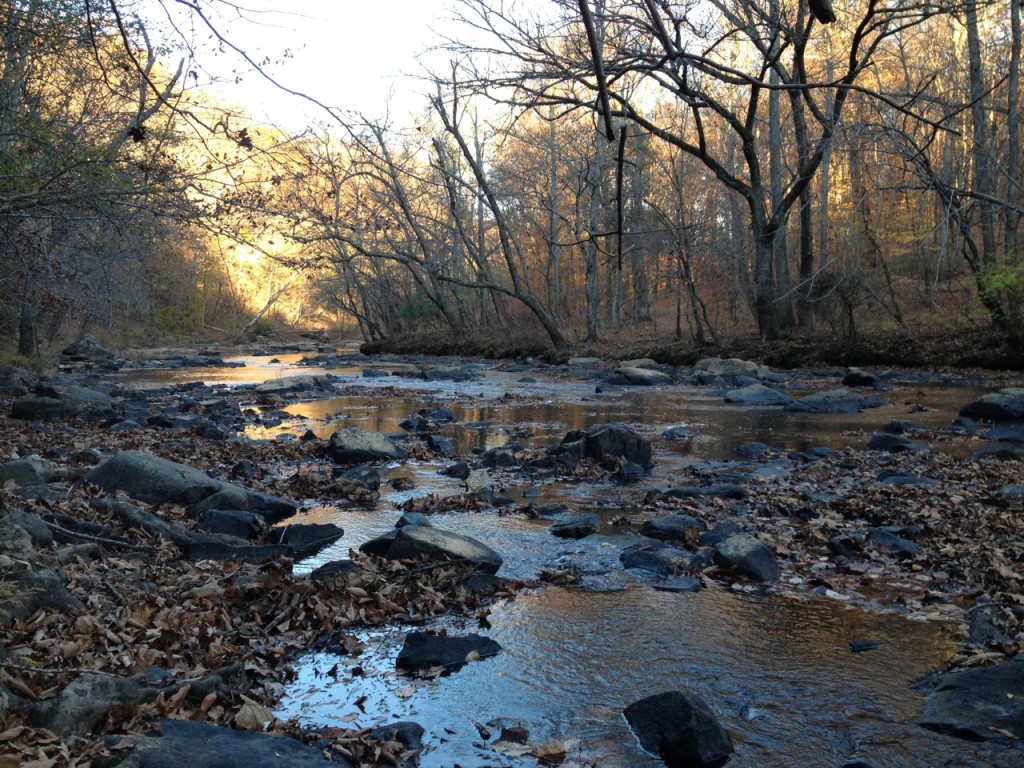
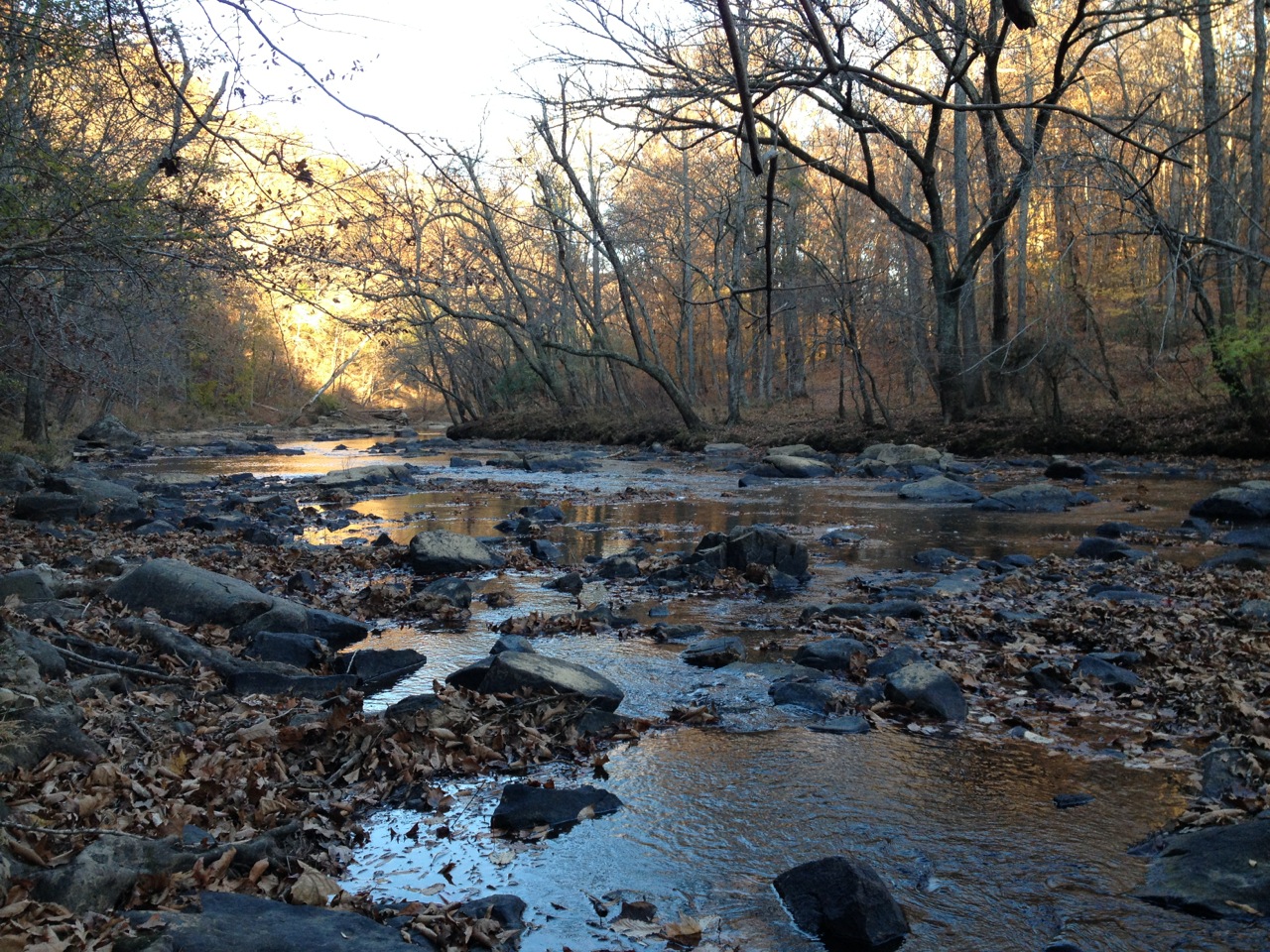
The Eno River at dusk in autumn

The river slips softly / into the dusk of the year

The Eno River at dusk in autumn

Looking eastward down the Eno River, somewhere along Holden Mill Trail, about four-thirty in the afternoon in early November.

On certain autumn afternoons there is a brief passage — if you are lucky you may get ten minutes to appreciate it — when the sun has drifted low and the afternoon breeze has calmed and the light reflects off the surface of the river as from a mirror, doubling the trees and the intensity of their lingering color, and the earth gives the illusion of brightness. The season and the hour have so muted the wood’s palette that the russet of late-hanging leaves calls louder than crimson in June. The sudden splash of gold away downstream beckons like summer’s lost oasis. But the bare arms of sycamore and ironwood make a stark fence against it, and it recedes from my approach — the light, the afternoon, the year. The vestigial warmth of summer dissipates like a mist; winter seeps from the earth and fills its absence.

In defense of false expectations

Last spring — I’m late blogging this — the Guardian reported on a study finding that literature for very young children frequently reinforces a materialist, consumerist bias… but that other literature deters that bias. Books, in other words, and the ideas in books, shape their readers, particularly young readers. Hardly a new idea, but one perhaps too easily ignored. The problem is what an author ought to do with that knowledge — or a parent. As Alan Jacobs observed at the time, every book potentially wants us to want something, which is not bad in itself, but we ought to consider what it wants us to want. Jacobs quotes C. S. Lewis’ lament that the fairy tale “is accused of giving children a false impression of the world they live in” when, on the contrary, it’s “school stories,” the allegedly realistic ones, that give false expectations. “All stories in which children have adventures and successes which are possible,” Lewis argued in “On Three Ways of Writing for Children”, “in the sense that they do not break the laws of nature, but almost infinitely improbable, are in more danger than the fairy tales of raising false expectations.”

But I wonder whether those “school stories” are more important than Lewis realized.

Ouija boards and what we want to believe

It’s too late for Hallowe’en, but Linda Rodriguez McRobbie’s Smithsonian Magazine article on “The Strange and Mysterious History of the Ouija Board” is worth a read if you’re at all interested in nineteenth-century history, or in the occult, or if you’ve ever played with one. Or if, like me, you’re at all interested in the limitations of science and of scientific thinking and in the ways Americans today think about religion. (My thoughts follow the jump.)

A crumbling sanctuary of dawn-lit leaves

The east window of my study looks out through a scrim of trees to the neighbor’s golf-green yard and the street and, further on, a young wood of mostly pines. The trees close by appear only as vertical trunks, their leaves cropped out by the window’s frame, but a dogwood leans out low from their shadow and shelters the view with its foliage. For a few short weeks in early fall, when the leaves of the dogwood blushed but still clung to their limbs, the morning light set their edges glowing red-gold, and past their brilliant outlines I could see only the fuzzy blue-green shadow of distant pines. The study became a sanctuary enfolded by copper light, beyond which the world was made misty, unfocused, irrelevant.

That effect lasted only an hour each morning and for two or three weeks. By mid-morning the sun had climbed high enough to light the leaves of the backdrop woods; by the second week of October the dogwood’s leaves had thinned and let the world through in too much clarity. The sanctuary is crumbling now, and what remains is only a relic, like the cracked foundations of an ancient church now open to air and birdflight, in which I sit wondering if God really lived here once.

I got a lot of work done during those weeks.

Cheap poetry, Summer 2013

Silent at her loom the spider labors
To be unseen and never heard — as do I, watching,
Until, unseeing, I cry out: Web in my beard.


She chews her words, predigesting
Speech, sound and picture out of sync
Like Mothra’s overdub. I would prefer
Silence, and a piano.


Thin and wan like a starving dog, the coffee
Tints the cup — or does the cup tint it?
Not strong enough to fuel philosophy.